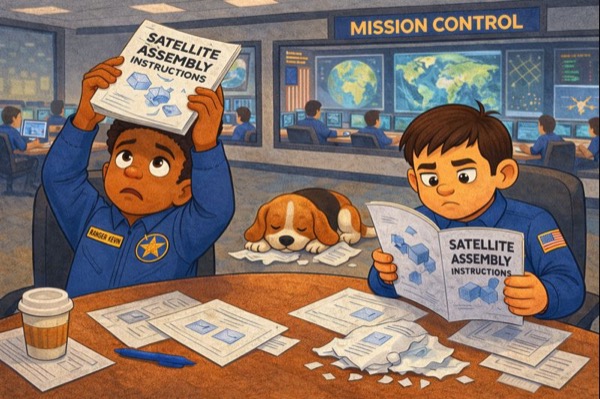
If you’ve found yourself watching your child stare at a page of math problems and wondering “is this normal, or is she falling behind?” — you are not overreacting, and you are very much not alone. It’s a common worry among parents of 3rd graders, and an understandable one.
Third grade is the year math gets real. Up to now, a lot of math has been counting, simple addition, and recognizing numbers. In 3rd grade, kids are expected to master multiplication and division within 100, add and subtract larger numbers with regrouping, and start making sense of fractions. It’s a big jump in a short time, and it’s the point where small gaps start to show — and, if left alone, start to compound.
The good news: the warning signs are usually easy to spot once you know what to look for, and most of them respond well to the right kind of practice at home. Here are seven of the most common ones.
7 signs to watch for
1. Multiplication facts just aren’t sticking
By the end of 3rd grade, kids are expected to know their times tables fluently. If your child still has to count up or use fingers for 6 × 7 well into the year, that’s one of the most common signs of a gap — and one that quietly slows down everything that comes after it, since division, fractions, and long multiplication all lean on those facts.
2. Still counting on fingers for basic addition and subtraction
Fingers are fine for a kindergartner. By 3rd grade, basic facts like 8 + 5 should be close to automatic. Relying on counting for the easy stuff means there’s less mental bandwidth left for the harder, multi-step problems they’re now being asked to solve.
3. Homework takes far longer than it should — with tears
A worksheet that should take 15 minutes turns into an hour of frustration, erasing, and “I can’t do this.” Occasional bad days are normal. A regular pattern of meltdowns over math usually means the work is genuinely too hard for where their skills are right now, not that your child is being dramatic or lazy.
4. “I’m just bad at math”
Listen for how your child talks about math. When a kid starts avoiding it, hiding worksheets, or labeling themselves as “bad at math,” the confidence gap is often running ahead of the actual skills gap — and that mindset can become its own obstacle if it sets in.
5. Word problems are a wall
Your child can do 24 ÷ 4 on their own, but freezes when it’s dressed up as “Mr. Command has 24 satellite parts to share equally among 4 Rangers.” Trouble translating a real situation into the math behind it is common, and it’s a sign they’re memorizing steps without fully understanding what the math means.
6. Place value and regrouping trip them up
Carrying in addition and borrowing in subtraction depend on really understanding that the 3 in 36 means thirty. If your child lines numbers up wrong, forgets to carry, or gets lost in multi-digit problems, the place-value foundation underneath probably needs shoring up.
7. Grades slip — or the teacher gently raises it
Falling math scores, or a teacher mentioning your child is “working below grade level” or “needing extra support,” shouldn’t set off alarm bells, but they’re worth taking seriously and acting on early. Teachers see a whole classroom’s worth of typical 3rd-grade math, so their read is a useful one.
One sign vs. a pattern
Before you worry, a dose of perspective: plenty of 3rd graders will hit a rough patch with at least one of these at some point. A single hard week, or one topic that takes longer to click, is just learning. What’s worth paying attention to is a pattern — several of these signs showing up together, or one of them sticking around for weeks despite practice. That’s the cue to step in, not panic.
What actually helps
If a few of these felt familiar, here’s the encouraging part: 3rd-grade math gaps are very fixable, especially caught this early. A few things make the biggest difference:
- Keep practice short and daily. Ten focused minutes a day beats a stressful hour on Sunday. Consistency is what moves facts into long-term memory.
- Target the specific gap, not everything. If it’s multiplication facts, drill multiplication facts. Re-teaching the whole year is overwhelming for both of you and rarely necessary.
- Make it concrete and real. Kids who can’t connect math to anything real tend to disengage. Tie problems to things they care about — sharing snacks, scoring a game, or, at Mission Control, launching a satellite — so the math has a reason to exist.
- Protect their confidence. End practice on a problem they can get right. Swap “You’re bad at this” self-talk for “You haven’t learned this yet.” Momentum matters as much as the math.
- Get outside help if the pattern persists. If gaps stick around despite steady practice, it may point to something like a working-memory or learning difference — worth a conversation with the teacher or a specialist. That’s information, not a verdict.
A simple place to start
If multiplication facts are the gap you spotted — a common one at this age — the easiest first step is just a few minutes of focused practice a day.
Send the free sample mission
The 2s times-table worksheet set from the Multiplication Workbook, with answer key — straight to your inbox.
Check your inbox!
Your free sample is on its way to . If you don’t see it, check your spam folder.
Ready for the full program? Both workbooks are on Amazon.
See the workbooks on Amazon →Spotting a gap early is the hard part — and you’ve already done it. From here, a little steady practice goes a long way.